Stonebriar Apartments
We're taking you back to one of VCDC’s first Low-Income Housing Tax Credit (LIHTC) properties: The Stonebriar Apartments in St. Paul, VA. Stonebriar was developed in the 1990’s, but its original building was constructed in 1909 as the “Blue Sulphur Hotel.” The hotel was passed down to multiple different owners over the years and became the St. Paul Hotel in 1955 after it received a stylish refurbishing. In 1996, Wise County Redevelopment and Housing Authority (WCRHA) redeveloped the St. Paul Hotel into Stonebriar Apartments to serve senior citizens and promote downtown revitalization.
VCDC helped fund this reconstruction through one of our first Housing Equity Funds, and in 2016, we invested $924,000 in LIHTC equity along with $309,604 in Federal Historic Rehabilitation Credits that went towards an extensive renovation of the apartments. These renovations emphasized energy efficiency and resident comfort within all 23 homes in the building, including new accessible walkways, high quality heating and cooling systems, flooring and cabinets, and restoration of the former hotel’s front porch.
Ever since Stonebriar’s original rehabilitation in 1996, the Town of St. Paul has undertaken several other redevelopments to restore historic charm and support new opportunities in the town, such as refurbishing old buildings, creating new businesses, and bolstering tourism efforts. We can’t deny that the Stonebriar Apartments have not only brough charm to St. Paul but have also brought quality and affordable homes to seniors in the area. We are so proud to have Stonebriar Apartments in our portfolio, coming up on 25 years!
Location:
St. Paul, VA
Development Partner:
Wise County Redevelopment and Housing Authority
Total Homes:
23
Community Served:
Senior citizens
More VCDC Impact Stories
Historic Downtown Tappahannock is helping one of Virginia’s most historic downtowns imagine what comes next. Set along the Rappahannock River, Tappahannock’s downtown district holds deep history, local character, and significant opportunity. With 14 buildings dating back to the 18th century and a place on the National Register of Historic Places, the downtown reflects generations of community life, commerce, and connection.
For nearly 50 years, the Albemarle Housing Improvement Program (AHIP) has worked to preserve safe, affordable homeownership for families across Charlottesville and Albemarle County. Through critical home repairs, AHIP helps residents remain safely housed, maintain stability, and stay connected to the communities they call home. But as housing challenges grow more complex and community needs continue to rise, AHIP recognized that sustaining this work for the future would require more than strong services alone — it would require investing in the long-term strength and sustainability of the organization itself.
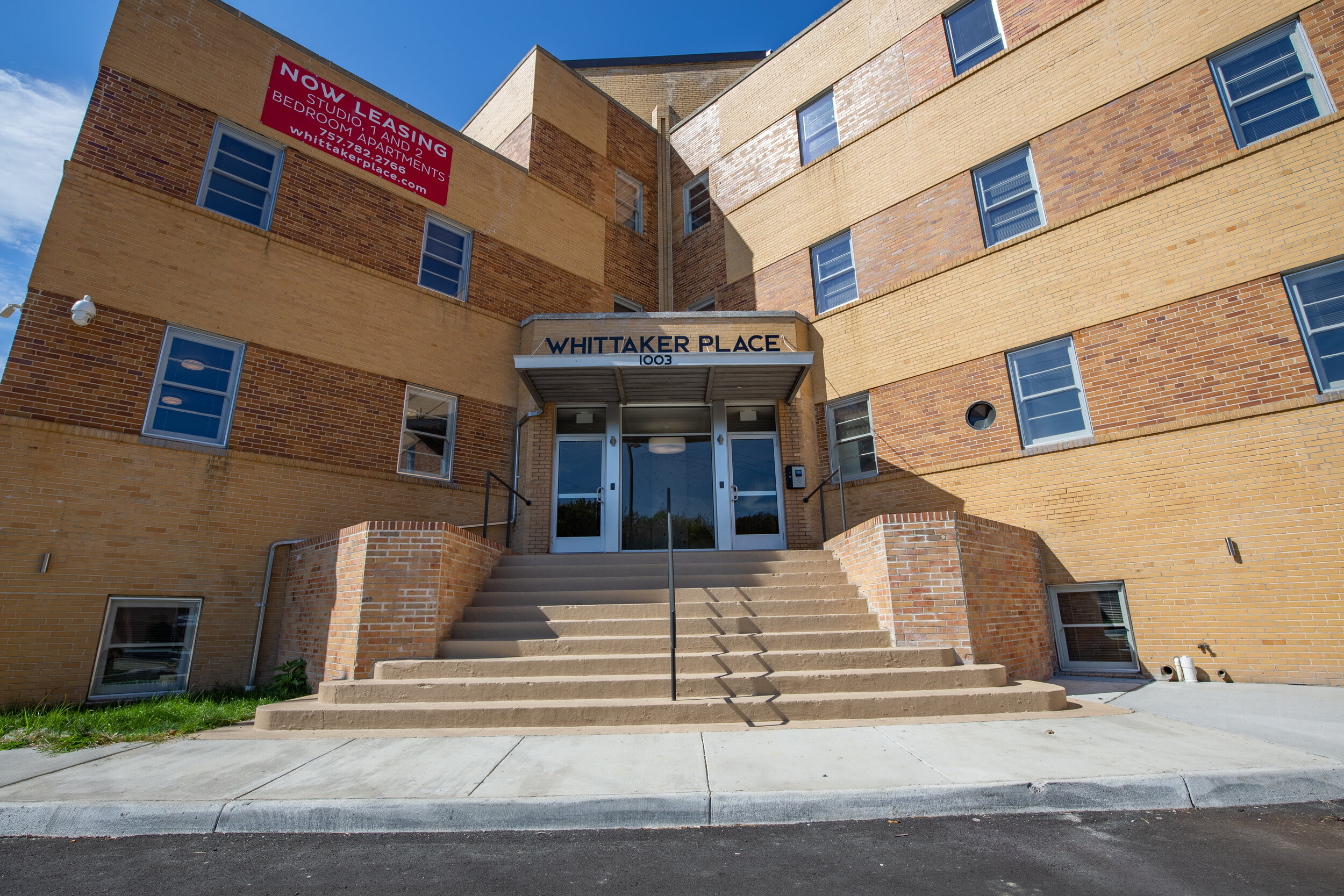
Just over a century ago, Newport News, Virginia, became home to one of the first hospitals in the United States designed and operated by African American citizens. Whittaker Memorial Hospital represents a triumph in resiliency born out of the Reconstruction and Segregation eras when Black patients and physicians were shut out from quality medical care across the country. Today, what remains of Whittaker Memorial Hospital now serves families with high-quality affordable housing units, carrying on the legacy of a building that serves the Newport News community with the same spirit of care and commitment.
In the outskirts of Charlottesville, a revolutionary housing development is reshaping the lives of hundreds of families. Southwood, a former mobile home park now undergoing an innovative redevelopment by Habitat for Humanity of Greater Charlottesville, exemplifies how community-driven efforts can break the cycle of housing insecurity while preserving the spirit of a neighborhood.
Habitat for Humanity of Franklin County has been dedicated to providing affordable housing to families in need. Over the years, this volunteer-driven organization has built or rehabilitated about one home annually. In recent years, the organization has sought to amplify its impact and create more housing opportunities for residents in Franklin County. Their turning point came when they participated in the Mission Elevation Program.
VCDC's Technical Assistance (TA) Program offers unique benefits to our partners in affordable housing to help them obtain the resources they need to create real change in their communities. Recently, we used TA funds to support training services for over 80 property managers and maintenance staff at our affordable communities across Virginia.
Housing Alexandria, a nonprofit developer based in Northern Virginia, is dedicated to creating homes and community-focused spaces that empower the residents of Alexandria. With over 840 affordable homes delivered and 400 additional rental units currently planned for construction, the organization has significantly impacted the Alexandria region. As Housing Alexandria has grown, CEO Jon Frederick and COO Elisa Mondragon recognized the need for strategic guidance to tackle new, ambitious projects. To address this, they joined Cohort 6 of VCDC’s Mission Elevation program.
The Judeo-Christian Outreach Center (JCOC) is a community-focused organization that provides essential services to low-income and vulnerable residents including an emergency shelter, a veteran transitional housing program, a food pantry, and a day support program. Recently, JCOC reached a major milestone in their mission to empower communities after beginning renovations for a campus that will create 38 new supportive housing homes for people experiencing homelessness in Virginia Beach. As JCOC has expanded, Executive Director Todd Walker and Development Director Kristin Ward recognized the need to enhance their administrative, financial, grant management, and fundraising capacities. To address these needs, they joined VCDC’s Mission Elevation (ME) program.
Originally constructed in 1890 as a bustling hotel, the Fairfax Hall building in Waynesboro, VA has seen many transformations and held many different faces. The structure operated until the early 1900's as the Brandon Hotel and was later used as a music institute, Brandon Hall, until it eventually converted into a junior college for girls. Today, thanks to the support and assistance from the city of Waynesboro, local public entities, and VCDC, Fairfax Hall has been transformed and updated into 54 high-quality affordable homes for senior citizens.